Who Should Skip This Guide (and Who Should Keep Reading)
Skip it if you need a tested, scored comparison of named soup-base brands. I haven't run one, and the research pack for this piece didn't include one. The Consumer Council homepage (consumer.org.hk) lists test categories, but nothing supplied shows a soup-base test. So no brand rankings, no invented prices.
Keep reading if you're hosting four to eight people in a Hong Kong flat and need to decide which style of base to buy before you stand in a Fortress aisle. That decision matters more than the brand. Pick the wrong style and you'll have one person sweating and another eating plain tofu.
Timing: this is a cold-season purchase, and my sources were fetched 3–5 November 2026. I have no verified order-by dates or delivery windows for any retailer. Check each shop's cut-off at checkout. If you're hosting on a weekend in December, buy the week before.
Best Overall: A Split Pot With Mala and Mushroom Bases
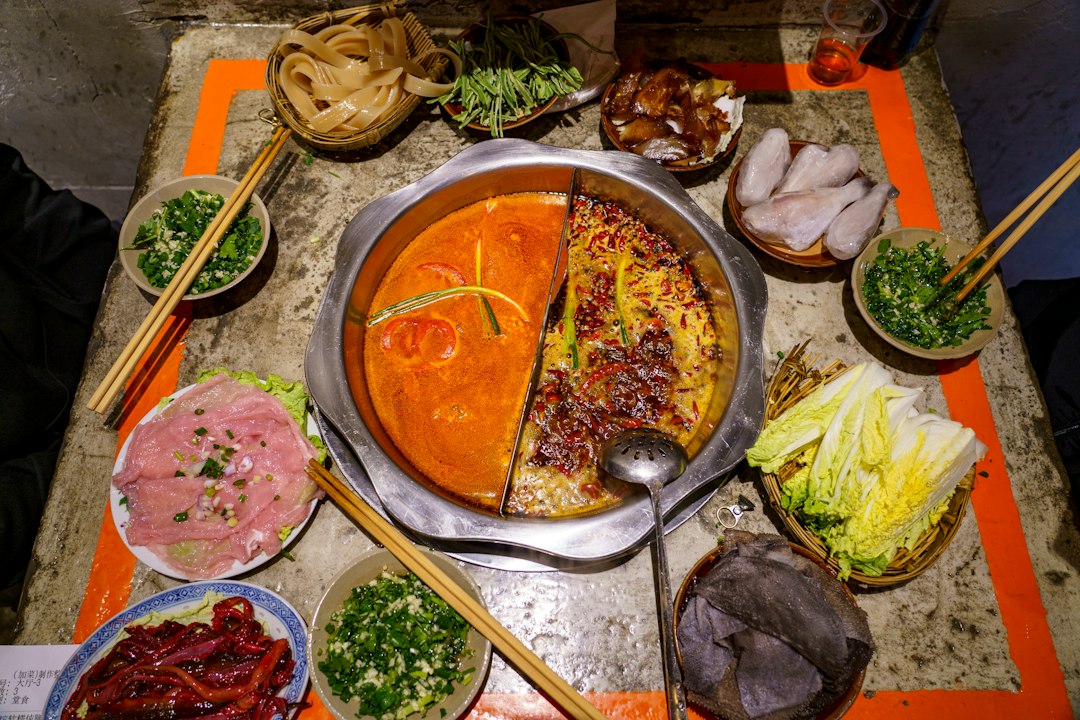
This is the pick. A two-flavour pot is a recognised format. Wikipedia's hot pot entry shows a Sichuan-style double pot pairing sour suan cai with spicy mala broth, and a two-flavour pot built into a dining table (Wikipedia: Hot pot).
I'd pair mala with mushroom, not with suan cai. Per the same entry, Yunnan mushroom hot pot omits strong spice and chilli so the mushrooms' own flavour comes through. That makes it the neutral half. Anyone, at any spice tolerance, has somewhere to cook.
The compromise: you need a divided pot or two portable burners. In a 400 sq ft flat, that means clearing the dining table and accepting that the other side of the room is now a cupboard.
Mushroom Base: The Mild Pot That Keeps Everyone Included
Per Wikipedia, Yunnan wild mushroom hot pot is seasonal and depends on local mushroom availability. That's the regional dish, though. A packaged base on a Hong Kong shelf isn't bound by that, and I can't verify what any given sachet contains. Read the ingredient list for actual mushroom content rather than trusting the front label.
It's the pot your parents will finish. Verdict: buy it as the default half, never as the star.
Mala Base: For Guests Who Came for the Heat
Chongqing hot pot is the best-known mala style, with chilli and Sichuan pepper giving a spicy and numbing effect (Wikipedia). The same source notes Southern styles tend toward spicy broths and complex dipping sauces.
Hong Kong practicality: mala in a closed flat means oil mist and a smell that outlasts the guests. Open a window if the weather allows, and run the extractor. I'd also put out sesame oil, crushed garlic and spring onion. That's the dipping sauce the entry describes as typical for Chongqing hot pot.
Skip the mala-only table if you haven't asked your guests first. Verdict: essential for the spice crowd, a mistake as the only pot.
Suan Cai Base: The Sour Contrast Pot
The entry says Manchu-style hot pot uses plenty of suan cai, a Chinese cabbage pickle, to make the broth sour (Wikipedia). Sour and spicy together is a recognised pairing in the double-pot photo caption.
It's the pick for the host who has done mushroom-and-mala before and wants something different. It's a worse choice for a first-timer table. Sour is polarising, and you'll be left with a pot half-eaten.
Plain-Water, Northern Style: Only If the Meat Is Good
Northern-style hot pot, as with Beijing instant-boiled mutton, focuses on the main ingredients rather than the soup base, with water as the main liquid instead of flavoured broth (Wikipedia). So there's nothing to hide behind.
Don't buy a sachet for this one. Spend the money on the mutton or beef. If your budget is tight, this style punishes you. Verdict: for people who care about the meat counter more than the pot.
DIY Light Stock: Cheapest, With the Most Effort
The entry lists basic stock as water, salt and spices. That's the floor. Make it yourself and you control salt, which sachets rarely let you do.
The cost is time. If you work late and the guests arrive at 7:30pm, buy the sachet. I'd say that plainly rather than pretend a homemade stock is always worth it.
Six Base Styles Compared
This table uses only what the source material supports. No prices appear because none were verified. "Check retailer" means confirm stock and cost yourself.
| Base style | Character (per source) | Best role at the table | Price (HKD) |
|---|---|---|---|
| Split pot: mala + mushroom Our Pick | Double-pot format is documented; spicy and mild sides | Mixed groups | Check retailer |
| Wild-mushroom | Omits strong spice and chilli | Mild default | Check retailer |
| Chongqing mala | Chilli and Sichuan pepper; spicy and numbing | Spice lovers | Check retailer |
| Suan cai | Sour from pickled cabbage | Contrast pot | Check retailer |
| Plain water (northern) | Focus on ingredients, not broth | Premium-meat tables | Meat cost |
| DIY light stock | Water, salt, spices | Salt control | Check ingredients |
Food Safety Alerts to Check Before You Shop for Ingredients
The Consumer Council homepage carried two Centre for Food Safety alerts this week that touch a hot pot table (consumer.org.hk).
On 3 November 2026, the Centre said a pre-packaged bamboo shoot sample contained the preservative sulphur dioxide, but its label didn't state the additive's function class and name. The public was advised to stop consuming the affected batch. If you're buying packaged bamboo shoots for the pot, read the label.
On 2 November 2026, the Centre suspended imports of poultry and poultry products, including eggs, from Kittitas County in Washington State after an H5N1 report. That's a county-level suspension, so it doesn't mean all poultry is off the shelf. Still, it's worth knowing if you're thinking of the Cantonese egg-in-dip habit. The Wikipedia entry mentions mixing a raw egg with condiments, with the stated aim of reducing the "heat" absorbed. My call: skip the raw egg if children, elderly guests or anyone pregnant is at the table.